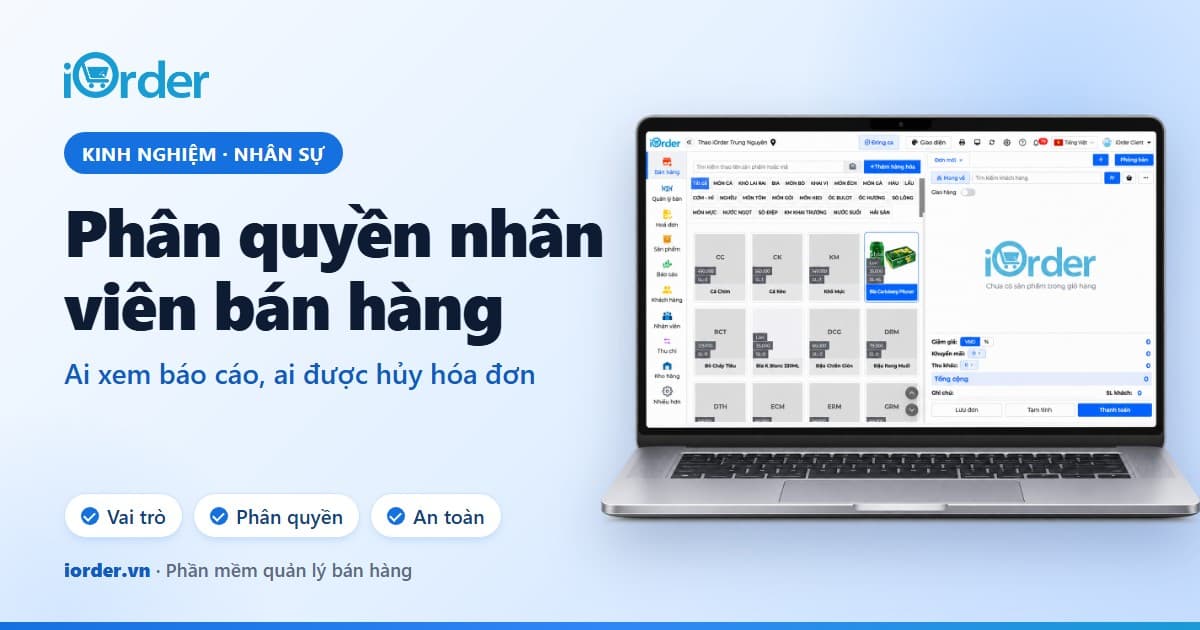
When the store was small, the owner often did everything himself or trusted everyone equally. But when there are more cashiers, servers and shift managers, employee decentralization becomes necessary: everyone can log in to all functions, so a wrong operation or a bad intention can affect the whole store.
Why must employee decentralization?
Delegating authority is not about doubting employees. It helps each person see and do just what they're doing, reduces mistakes, protects sensitive information like profits and costs, and creates a clear trail to know who did what when you need to review it.
Principle of least rights
Only grant each person the necessary permissions for daily work. If you need additional permissions, ask for them and be approved, rather than granting them broad permissions from the beginning for convenience. This method is simple but significantly reduces risk, because most incidents occur when people who do not need rights have rights.
Suggested roles for small stores
Cashier: sales, payments, printing invoices, viewing orders for your shift
Serving: ordering, viewing and updating tables, not viewing sales
Shift management: add permission to view shift reports, approve discounts, and end shifts
Shop owner or manager: all reports, inventory, cost price, staff and installation
Operations should be tightly controlled
Cancel or edit a paid invoice
Discounts and promotions outside the program
See profit and cost
Delete or adjust customer debt
Adjust inventory and check inventory
These operations directly affect money and goods, so they should only be assigned to people with appropriate responsibility, and the person performing them should be recorded.
Procedures when having new employees or leaving the job
Create separate accounts for each person, do not share accounts.
Assign appropriate roles to positions right from the start.
When employees change positions, adjust roles accordingly.
When an employee quits, lock or delete the account on the same day.
How to add employees, create roles and assign permissions is guided in Employee management guide.
Review decentralization periodically
Every quarter, review the list of accounts and roles: who is no longer working but whose account is still open, who has more authority than actual needs. Combined with work end of shift at the end of the day so that each shift has a clear responsible person.
Get started with iOrder
iOrder is POS management software for computers, POS terminals, and phones. It combines sales, table management, inventory, invoices, receipts and expenses, shift closing, and reporting in one system. You can view Introducing iOrder POS management software or leave information on the page Contact Let the iOrder team advise you on how to apply employee decentralization to your store model.