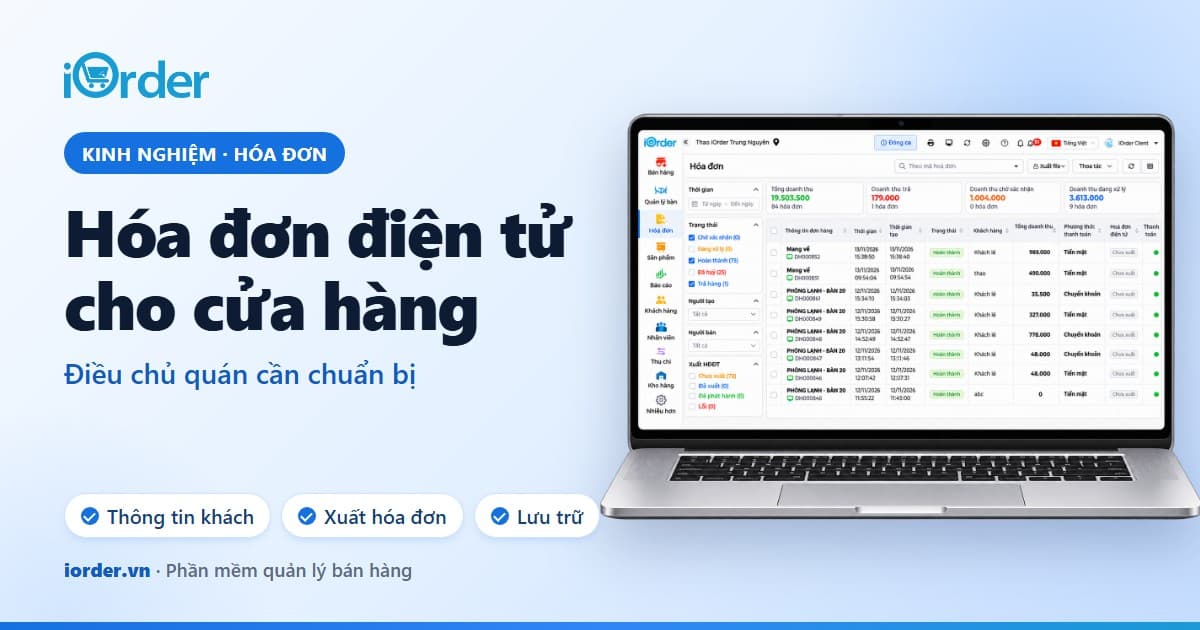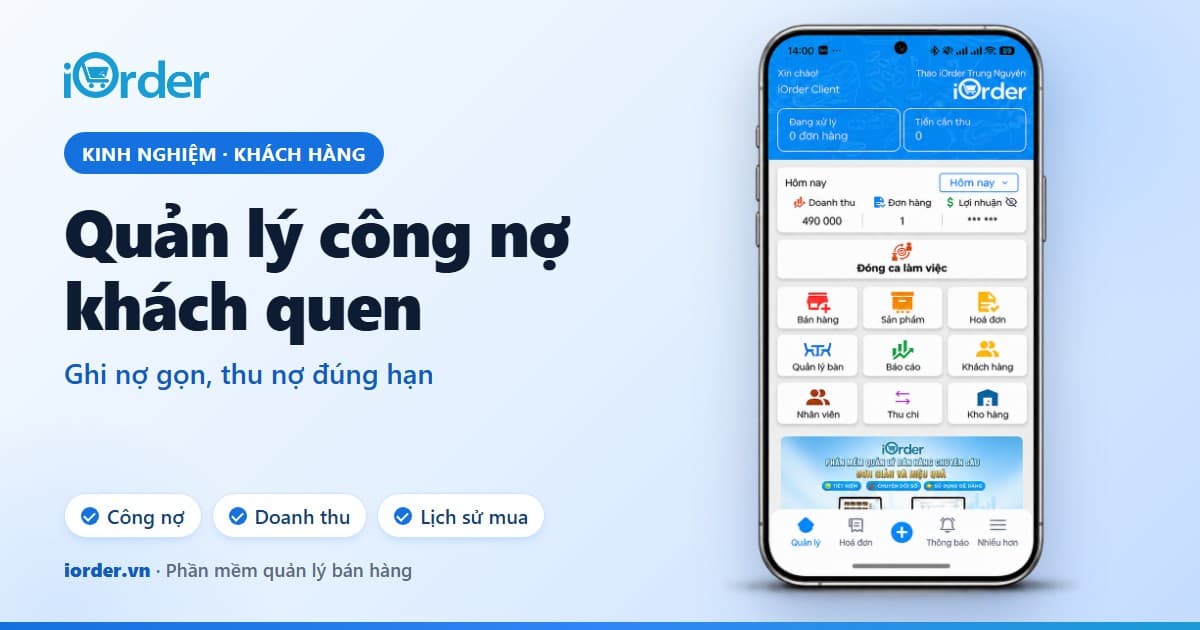
Many stores give regular customers debit notes to retain customers, but many shop owners also have headaches because debt books are scattered in notebooks, messages and employees' memories. Managing customer debt properly does not mean squeezing customers, but letting both parties know clearly what accounts have been recorded, paid and how much is left.
Why is it easy for customer debt to become a loss of revenue?
Debt often comes not from bad intentions but from a lack of clarity: an employee forgets to record it once, two people record the same amount, a customer remembers one number but the books record another number. The longer it takes, the more difficult it is to reconcile and the more likely it is that customers will feel bothered by debt reminders.
Set rules for debt before recording
Only allow debit to customers who have purchased regularly and have clear contact information
Set a maximum debt limit for each customer to keep risks under control
Agree a payment deadline, for example the end of the week or the end of the month, and make it clear to the customer the first time
Regulate who has the right to approve debits, do not leave it up to every employee to decide
Record each debt in the system
Each debt should be tied to a specific customer and a specific invoice. When customer data is in the same POS software, you can see for each customer two important numbers: purchased revenue and outstanding amount, so there is no more confusion when collecting money.
Customer purchase history also helps you decide whether to continue lending or not. How to add guests and view debt is instructed in Customer management guide.
Regularly check debts
At the end of the week or month, make a list of outstanding customers.
Compare debited invoices and customer payments.
Send customers a summary table so they can confirm the numbers.
Record the amount collected and update the remaining amount immediately upon receipt.
Remind debt politely without losing customers
Debt reminder is a small skill but affects long-term relationships. Please remind early when the debt is small, use a message clearly stating the amount, debit date and payment method instead of general reminders. Keep a friendly tone and give guests a convenient option, like bank transfer or pay on arrival.
Keep your debit safe
Limit debit and write-off permissions to trusted people, and review regularly who wrote what. The principle of decentralization is presented in the article Decentralize sales staff.
Get started with iOrder
iOrder is POS management software for computers, POS terminals, and phones. It combines sales, table management, inventory, invoices, receipts and expenses, shift closing, and reporting in one system. You can view Introducing iOrder POS management software or leave information on the page Contact Let the iOrder team advise you on how to apply debt tracking for your store model.